Quick Assembly, Stable Performance: Quick Assembly aluminum truss Redefines Stage Construction Efficiency
In the tense countdown to concert preparations or the limited time window for exhibition setup, the assembly speed and stability of stage trusses directly determine the implementation effect of an event. Quick Assembly Aluminum Truss takes "rapid construction + reliable performance" as its core advantages. It is not only an independent and efficient truss solution but also can be seamlessly integrated into the
Raya Stage System, working in synergy with the full range of components to free stage structure construction from tedious processes and achieve efficient implementation.
Core Advantage: Quick-Assembly Design Saves Time and Effort
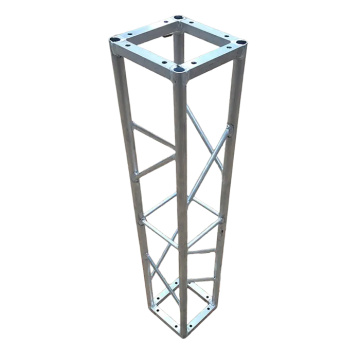
Quick Assembly Aluminum Truss breaks through the assembly bottlenecks of traditional trusses in terms of structural design. It adopts pre-installed connectors and precise buckle design, requiring no complex welding or professional tools. A team of 2-3 people can quickly complete the assembly, improving the efficiency by more than 50% compared with conventional truss assembly. At the same time, it inherits the lightweight and corrosion-resistant properties of Aluminum Truss, resulting in lower transportation costs and resistance to wind and rain erosion even for outdoor use. It balances efficiency and durability, perfectly adapting to scenarios requiring frequent construction such as temporary events and touring performances.
Synergetic Adaptation: Integrate into Raya Stage System to Build a Complete Solution
As an important part of the Raya Stage System, Quick Assembly Aluminum Truss can be flexibly matched with the full range of core components to form an integrated stage solution:
When combined with the Aluminum Alloy Plug-in Stage, the former is used to build top lighting frames and background frames, while the latter forms the main stage. Both feature quick-assembly designs, significantly shortening the overall construction cycle.
When there is a need to hang heavy equipment, it can be used in conjunction with the
Steel Truss System. The Quick Assembly Aluminum Truss takes charge of the lightweight area structure, while the Steel Truss System bears the load of large LED screens, heavy audio equipment, etc., balancing efficiency and load-bearing safety.
Matching with the
Aluminum Stage Truss can expand more creative shapes, such as curved surrounding frames and multi-layer lighting matrices, making the stage vision more layered.
When used with Raya Scaffolding , it can provide a safe operation platform for high-altitude installation and detailed debugging of trusses, further improving the convenience and safety of construction.
Scenario Value: Adapt to Diverse Needs, Balancing Efficiency and Quality
Whether it is the rapid setup for small and medium-sized roadshows or the complex structure construction for large-scale music festivals, Quick Assembly Aluminum Truss can play a core role. In brand pop-up events, it can be quickly combined with the Aluminum Alloy Plug-in Stage to complete the construction of the main stage and lighting frames within 2 hours. At outdoor art festivals, its corrosion-resistant property complements the load-bearing advantage of the Steel Truss System, ensuring the stable operation of the stage under various weather conditions. Even if the stage layout needs to be adjusted temporarily, the quick-assembly design supports rapid disassembly and reassembly to flexibly respond to changing needs.
From independent truss application to the overall solution of the Raya Stage System, Quick Assembly Aluminum Truss takes quick-assembly advantage as the core and links the Aluminum Alloy Plug-in Stage, Steel Truss System, Aluminum stage truss and Raya Scaffolding . It not only solves the pain point of low efficiency in traditional construction but also ensures the stability and creative presentation of the stage structure, making the stage preparation for every event more efficient and flexible.
Stage Truss Setup Steps and Precautions
I. Steps for Stage Truss Setup
(I) Preliminary Preparation Phase
• Site Survey and Planning: Arrive at the setup site in advance to confirm ground levelness and load-bearing capacity,Aluminum Alloy Plug in Stage Truss and check for surrounding obstacles (e.g., pipelines, pillars) and overhead conditions (e.g., ceiling height, hanging objects). Based on event requirements (e.g., stage size, load-bearing needs, equipment load), plan the truss setup area, assembly sequence, and access routes according to truss specifications. Create a simple layout diagram.
• Inventory of Materials and Tools: Verify the quantity and specifications of truss components (main pipes, crossbars, diagonal braces, connectors, base plates, reversal heads, square sleeves, etc.) to ensure compatibility. Lightweight Aluminum Stage Truss Inspect for any damage like deformation, cracks, or rust. Gather all essential tools: wrenches, screwdrivers, levels, tape measures, ropes, safety helmets, and anti-slip gloves.Also, ensure the proper functioning of auxiliary equipment (e.g., lifts, forklifts).
• Safety Precautions: Set up warning signs and barriers in the setup area to prevent unauthorized entry.Modular Aluminum Plug in Truss Personnel must wear personal protective equipment (safety helmets, anti-slip shoes, gloves). For tasks involving heights, inspect the stability of scaffolding or lifts in advance and ensure safety harnesses are used.
(II) Basic Setup Phase
• Assemble Base and Columns: Secure the truss base Durable Aluminum Stage System plates at the planned locations, ensuring they are level (calibrate with a level gauge). Use shims to adjust for uneven ground. Align the column truss interfaces with the base plates and fasten them with bolts or clamps. When tightening connectors, ensure even force distribution to avoid misalignment.
• Assemble the Main Truss Frame: Based on the layout diagram, assemble the horizontal main truss on the ground. Connect truss members using connectors, insert positioning pins, Aluminum Alloy Plug - In Stage and tighten bolts to ensure full contact at joints with no gaps. For large trusses, assemble in sections before integrating them to avoid instability from excessive length.
• Erect and Secure the Truss: With coordinated effort, slowly raise the assembled truss frame, using ropes for guidance and stability to prevent tipping. Align the erected truss with the columns and secure it firmly with fasteners. Aluminum Alloy Plug in Stage Use a level gauge to check vertical and horizontal alignment, making adjustments as needed.
(III) Finalization and Testing Phase
• Install Auxiliary Components: Install diagonal braces, Aluminum Plug in Stage reinforcement bars, and other auxiliary structures as needed to enhance overall stability. Areas where lighting, audio, or other equipment will be mounted call for extra reinforcement.Install reversal heads, square sleeves, and other accessories to prepare for equipment mounting.
• Mount and Calibrate Equipment: Plug in Stage Aluminum Mount equipment within the truss’s load-bearing capacity, ensuring even distribution to avoid localized overload. After mounting, recheck all connections for looseness and inspect the structure for deformation. Use a level to check the overall levelness.
• Final Inspection: Conduct a comprehensive check of all truss connection points, aluminum plug in stage for lighting reinforcement structures, and equipment mounting. Confirm there are no safety hazards. Simulate stress conditions expected during the event (e.g., gently shaking the truss) to test structural stability. Only after meeting setup standards can the work be concluded.




 Contact Now
 Wuxi Zhongshengwei Metal Products Co., Ltd.


