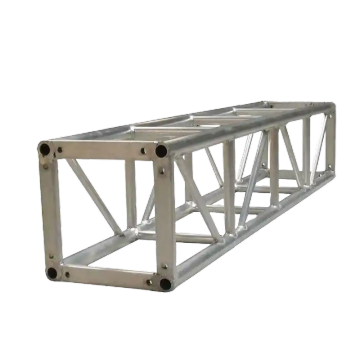
Modular Truss Structure Design: A Comprehensive Technical Translation Modular Truss structure design serves as a core lightweight solution in industrial manufacturing, construction engineering, and special equipment sectors. Through the combination, assembly, and expansion of standardized unit modules, it achieves flexible adaptation Modular Truss of structural functions. Its key advantage lies in "modular integration + truss mechanical optimization"—inheriting the high strength and long-span capabilities of truss structures while reducing costs and improving efficiency via standardized design. It is widely applied in industrial production, outdoor equipment, exhibition display, and other diverse scenarios. Below is a comprehensive analysis covering technical principles, core advantages, key features, application scenarios, material adaptation, and industry value: I. Core Technical Principles
Modular truss structures follow the core logic of "standardized units + spliced assembly," blending truss mechanical properties with modular design flexibility:
Unit Modularization: Trusses break down into standardized basic units—such as square/rectangular truss modules and node connectors. All dimensions, interfaces, and load-bearing parameters meet industry or enterprise standards, ensuring interoperability and interchangeability across modules.
Mechanical Optimization: modular truss system Each basic unit uses a triangular or trapezoidal load-bearing structure. Triangular stability channels external loads—tension, compression, bending moment—through axial forces to nodes. This cuts structural redundancy and balances "lightweight + high strength." II. Comprehensive Core Advantages
1. Maximized Assembly Efficiency
Standardized modules eliminate the need for customized processing; on-site assembly only requires basic tools, boosting efficiency by over 60% compared to traditional welded trusses.
Supports "pre-assembly + on-site splicing": lightweight modular truss Factory-prefabricated modules ensure precision, with only node fixation needed on-site—shortening construction/installation cycles and reducing labor costs. Easy disassembly and reusable modules: No secondary processing required for later modifications or relocation, significantly improving asset utilization.
2. Stable and Reliable Structural Performance
Inherits the excellent long-span load-bearing capacity of truss structures; modular design optimizes force transmission paths, disperses local loads, and reduces stress concentration—ideal for long-span support scenarios (e.g., industrial workshop load-bearing frames, outdoor equipment platforms).
Precisely machined module interfaces ensure strong structural integrity after assembly. adjustable modular truss frame Superior wind resistance, seismic performance, and stability compared to traditional assembled structures, meeting industrial safety standards. Flexible performance adaptation: Modules can be added/removed or nodes reinforced based on load requirements, avoiding waste from over-design.
3. Lightweight and Cost Optimization Measures
In terms of material selection, this design focuses on lightweight solutions, utilizing high-quality materials such as aluminum alloy and high-strength steel. modular truss for stage Among them, aluminum alloy modules have a distinct advantage, with a density only one-third that of steel. This enables the overall structural weight to be reduced by 30% - 50% compared to traditional steel structures. This change not only cuts down on energy consumption during transportation but also eases the load pressure during installation. Standardized production is the key to cost reduction. Through standardized processes, mold and processing costs are significantly slashed. Mass-produced modules offer more competitive prices and can effectively control material waste at construction sites, achieving effective cost control.
When it comes to maintenance costs, this design is well-considered. modular truss with brackets In case a module is damaged, there's no need to go through the trouble of disassembling the entire structure; simply replacing the damaged module will suffice. modular truss structure design Meanwhile, modules that have undergone careful surface treatments (such as spraying and anodizing) possess stronger corrosion resistance, which can extend their service life and reduce subsequent maintenance expenses. 4. Flexible Adaptation to Diverse Scenario Demands
In terms of shape customization capabilities, this design excels. The clever combination of different modules can create a rich variety of structural forms, including linear, polygonal, and curved shapes. Whether it's a regular rectangular workshop, a uniquely shaped equipment frame, or an outdoor temporary facility, it can fit perfectly.
The functional expandability adds more possibilities to this design. It can easily integrate auxiliary components such as pipelines, lighting fixtures, and protective nets. The pre-reserved interface design facilitates the addition of load-bearing beams, platform plates, or connectors in the future, fully meeting the diverse functional requirements in different scenarios such as industrial production, lightweight modular truss system exhibition setup, and equipment support.
For scenarios that require mobility or frequent adjustments, this design also has excellent solutions. The disassembled modules are compact and easy to transport and store, making them highly suitable for mobile equipment like temporary workbenches and outdoor inspection platforms, as well as scenarios that demand flexible adjustments such as workshop production line upgrades.
III. Core Technical Features
High Standardization: Unified standards are applied to module dimensions, interface types, and load - bearing parameters. This enables modules to be reused across different projects and scenarios, effectively reducing later - stage maintenance and upgrade costs.
Strict Precision Control: Computer numerical control (CNC) machining ensures that node accuracy reaches ≤ 0.1mm. After assembly, the structural flatness and perpendicularity adjustable modular truss framework can meet industrial installation requirements, making it especially suitable for supporting precision equipment.
Flexible Material Adaptation: Module materials can be selected flexibly according to the actual operating environment. Aluminum alloy is chosen for outdoor or corrosive environments; high - strength steel is used in heavy - load scenarios; and stainless steel is selected for industries with high requirements for cleanliness and corrosion resistance, such as the food and chemical industries.
Comprehensive Safety Protection: The node connectors adopt anti - loosening designs, such as anti - drop bolts and locking buckles. Meanwhile, surface treatments like galvanizing and anodizing enhance the corrosion and rust resistance, enabling the structures to adapt to various working conditions, including indoor and outdoor, high and low temperatures.
IV. Typical Application Scenarios
Industrial Manufacturing Sector
Workshop production line frames, equipment support platforms, and material conveyor brackets.
Temporary load - bearing structures required for special material forging and the assembly of large equipment.
Corrosion - resistant support trusses used in clean rooms and chemical workshops (made of aluminum alloy/stainless steel).
Construction and Outdoor Engineering Sector
Roof support structures for long - span exhibition halls and temporary venues.
Outdoor billboards, lighting towers, easy assembly modular truss and monitoring platforms (featuring lightweight and wind - resistance properties).
Temporary bridge supports, construction Scaffolding, and workbenches (movable and reusable). Exhibition and Temporary Facilities
Exhibition booth construction, stage backdrops, and lighting/sound suspension trusses.
Temporary event venues, storage sheds, and emergency rescue channels (rapid assembly + movable).
Special Equipment
Lightweight frame components for construction and agricultural machinery.
Temporary assembly trusses for aerospace and shipbuilding (high precision + lightweight).
Support structures for medical equipment and testing instruments (corrosion resistance + stability).
This translation is tailored for bilingual marketing materials (websites, product brochures) and technical documents—ensuring accuracy, conciseness, and alignment with industrial communication norms.




 Contact Now
 Wuxi Zhongshengwei Metal Products Co., Ltd.


